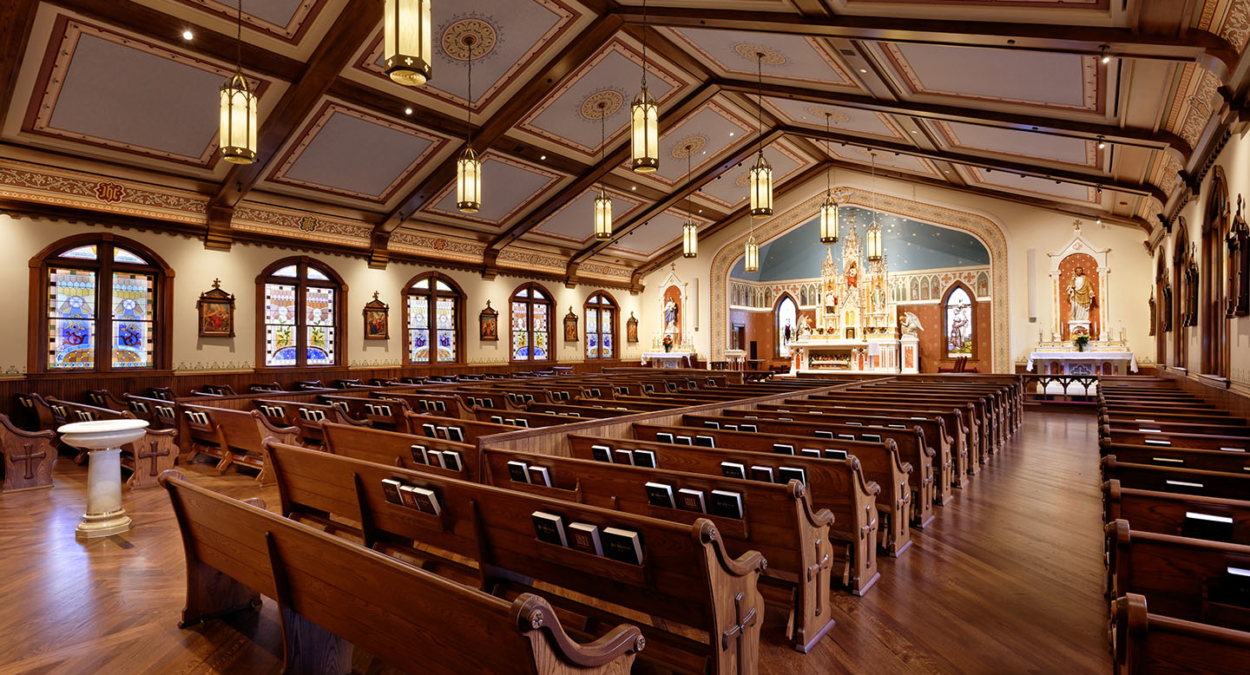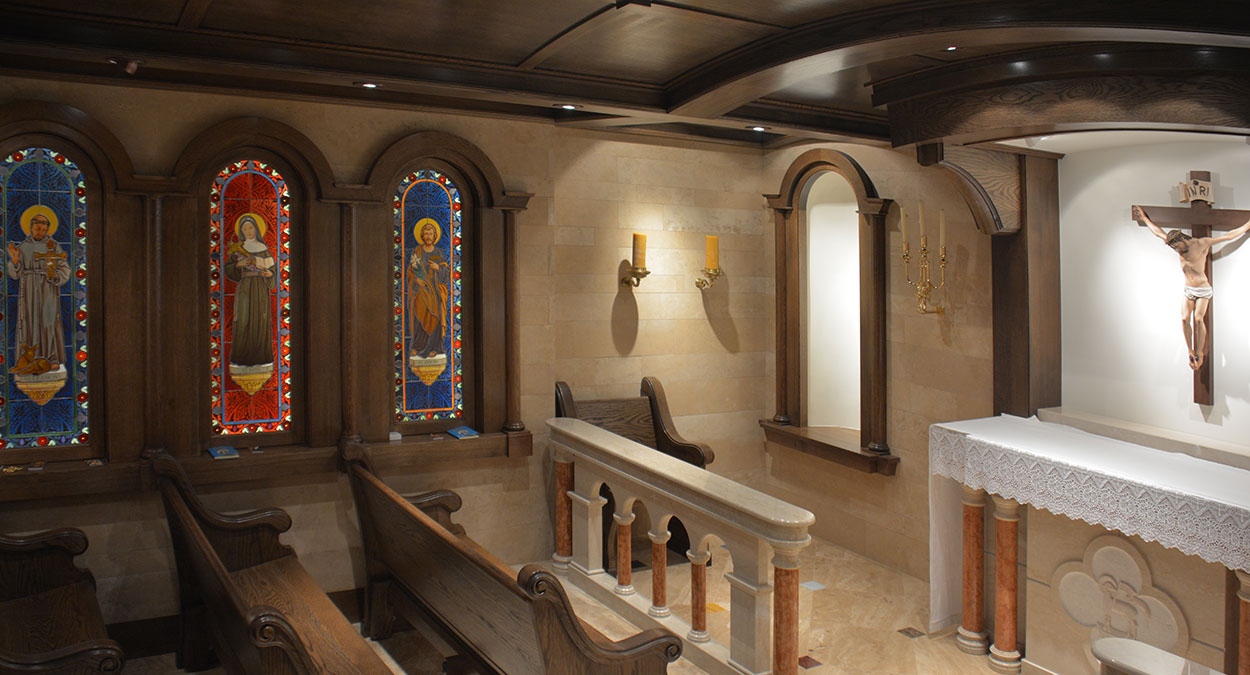
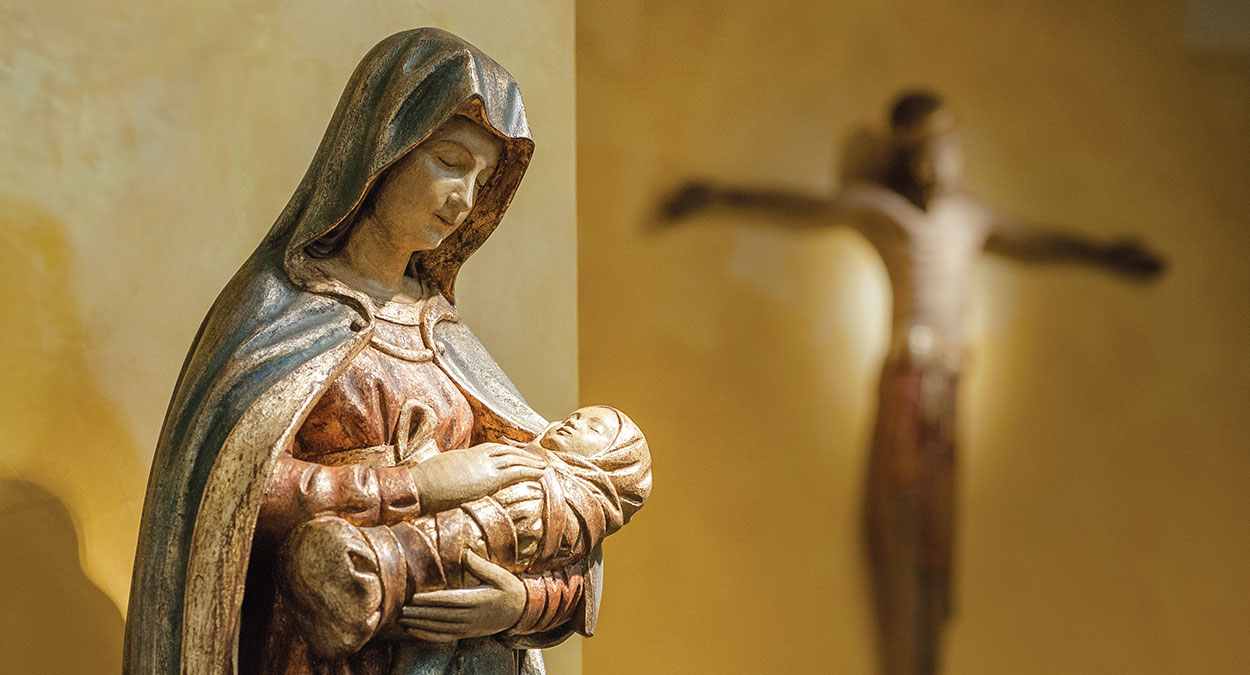
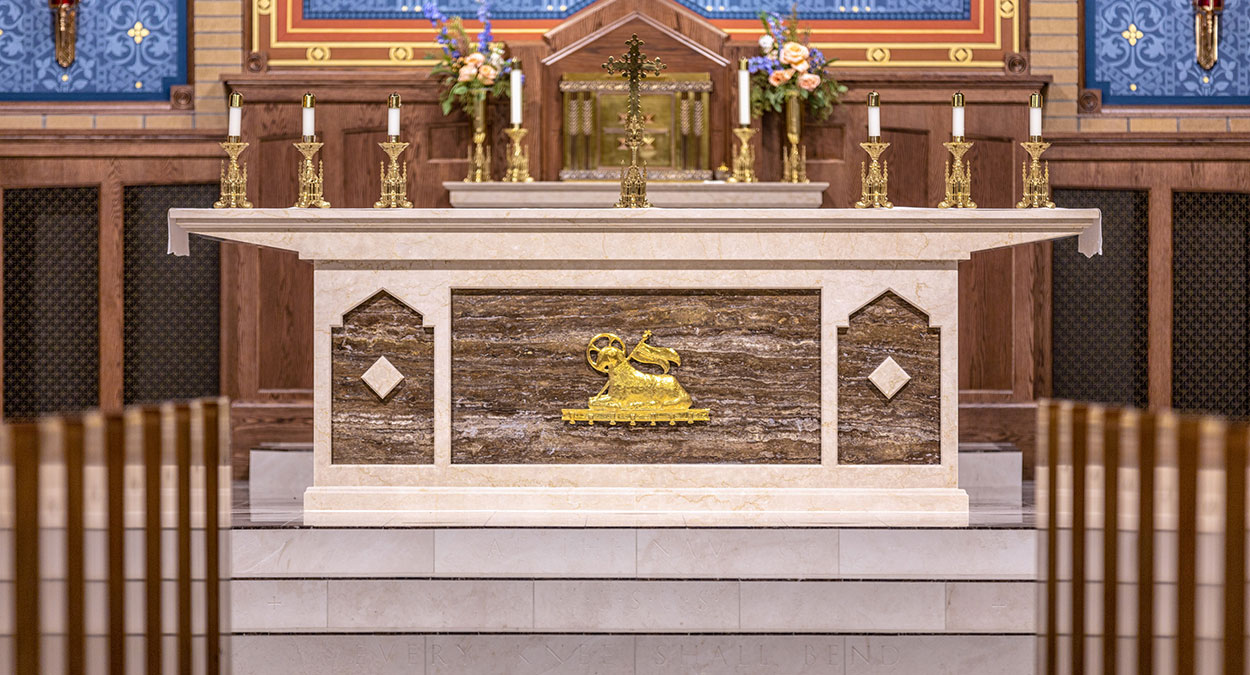
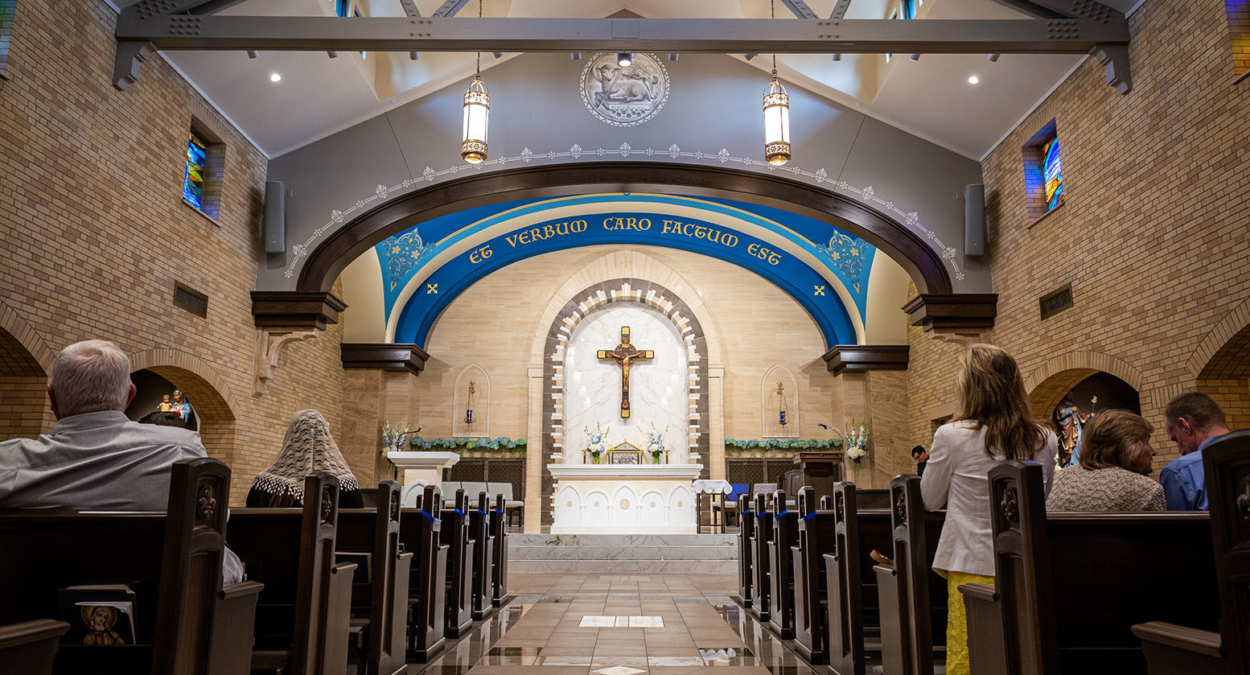
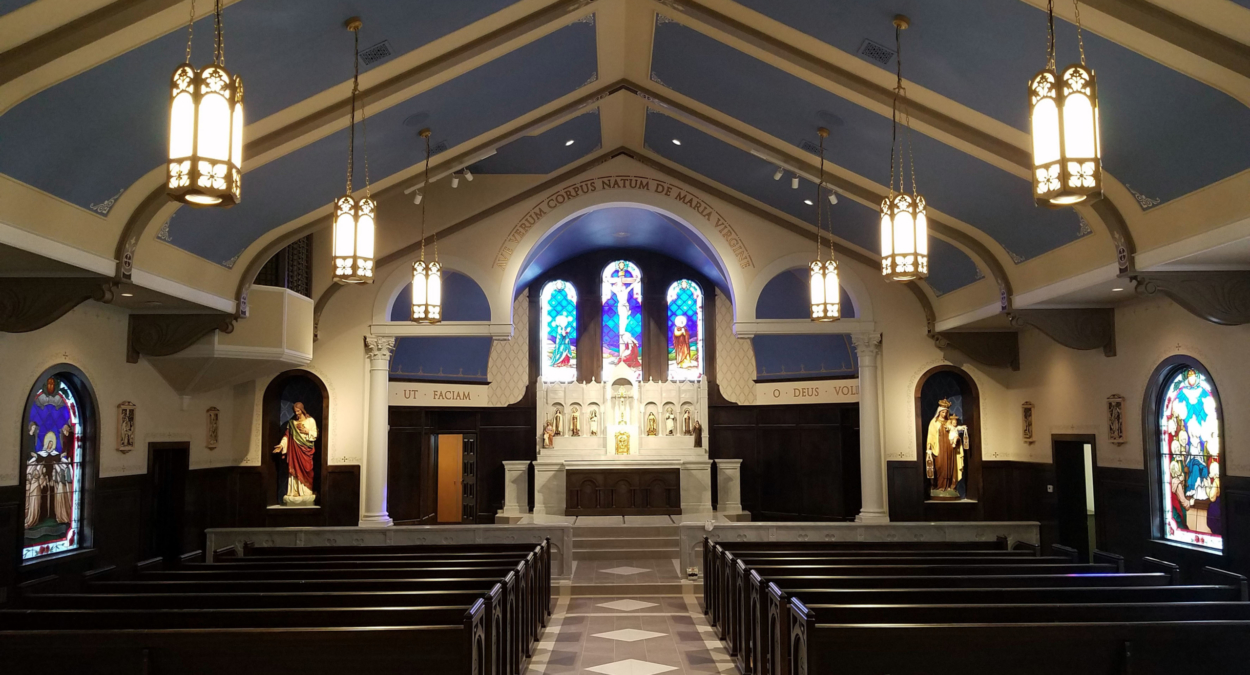
Should we hold our church buildings responsible for the ways in which they serve, structure, and support our liturgical celebrations? Should we expect our buildings to convey to us signs and symbols of heavenly realities? Should our churches be designed with the dual purposes of the Liturgy precisely in mind – that is, for the glorification of God and the sanctification of Man?
The answer of course is, Yes. We should rightfully demand much of our sacred architecture; and particularly so with regard to its intrinsically sacramental role. But this is only possible if we reflect on the abundance of meaningful precedents throughout salvation history – the places, times, spaces, and structures that have assisted God’s people in offering sacrificial worship back to Him.
Back in February of 2011, I was pleased to consider these questions and to present a four-part lecture series for the Aquinas Institute of Catholic Thought hosted by St Thomas Aquinas Catholic Center which serves the University of Colorado in Boulder. The title for the series was Catholic Sacred Architecture and the Sacred Liturgy: The Paradigm of Sacred Space in the Service of Worship.
The audio from the first lecture unfortunately is not available, but please listen to Lectures Two, Three, and Four by clicking on the links below. Each clip is 20 – 30 minutes in length.
Lecture 1: What is a Church? (audio unavailable)
Lecture 2: The Garden & Tabernacle
Lecture 3: The Temple & the Body of Christ
Lecture 4: The Christian Transformation - a Historical Overview
Question or Comments? Please contact us via email, or through the contact information listed on the Integration Design Group website, linked above.